
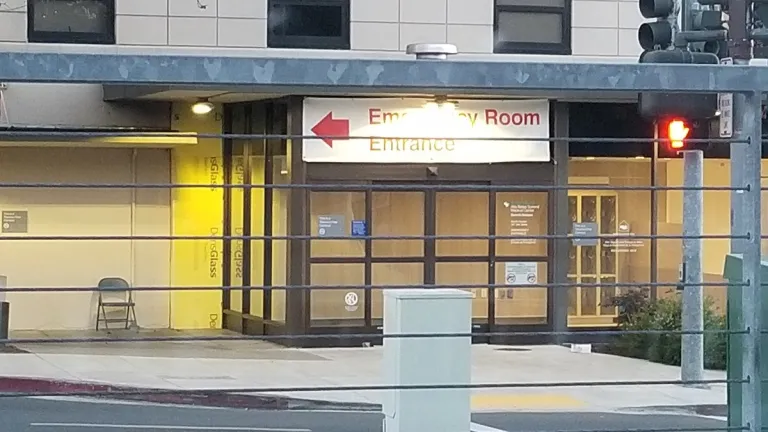
Did Covid kill my husband?
As of last week, Covid-19 had taken the lives of 1,000,000 Americans.
Was Jon victim No. 1,000,001?
No. Technically, Jon did not die of Covid. Not as far as anybody knows.
But did the virus, the pandemic, the shut-down of services, and the general fear of infection that pervaded the world in general and our household in particular take my husband’s life?
Was his death and the death of thousands — hundreds of thousands? — of other Americans collateral damage of the Covid pandemic?
Jon died of a pulmonary embolism on February 19, 2021. But I have to wonder, would he be alive today if it weren’t for the pandemic? Did Covid kill my husband?
Weak and spacey
Toward the end of January, 2021, Jon was not feeling well. He was weak and a little spacey. But instead of going to see his doctor — where a hands-on visit might have revealed that Jon’s heartbeat had gone wacko — Jon “saw” his doctor via a telephone conversation.
Anemia was suspected. A blood test was ordered.
Would an in-person visit have made a difference?
Blood test results
Days later, the blood test results came back negative. Rather than risk an office visit or more tests, Jon and his doctor decided on a wait-and-see approach.
Would more tests — a simple EKG — have turned something up?
Irregular heartbeat
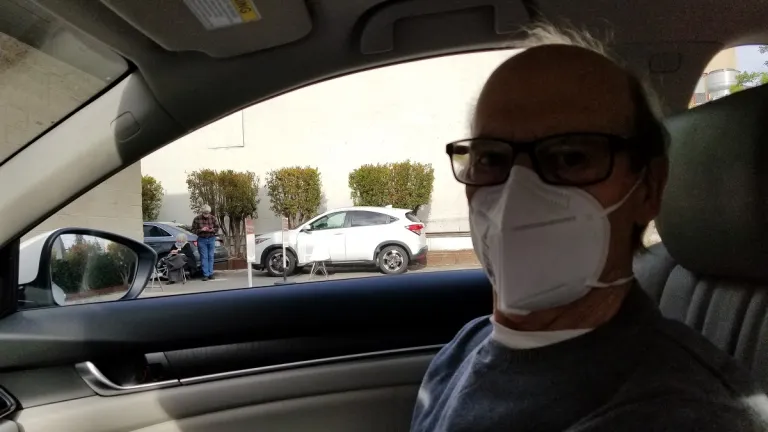
A week or two later, Jon noticed that his heartbeat was irregular. When I took him to the ER, I wasn’t allowed in. Jon was diagnosed with atrial flutter and prescribed Diltiazem for the arrhythmia and Xarelto to prevent blood clots.
What did Jon tell the ER docs? What did they say to him? Would things have gone differently if I’d been in the ER to advocate for Jon?
Doctor visit delayed
A week or two later, on a Monday night, Jon’s heartbeat was suddenly all over the map. There was no pattern to the arrhythmia. Fast. Slow. Scrambled. I called the cardiologist. His receptionist said the doctor would see Jon on Thursday — three days hence. We made an appointment.
How would things have gone if I’d put our Covid fears aside and taken Jon to the ER again that same night?
‘Where am I?’
On Wednesday, after dinner I was doing the dishes when I heard Jon call out, “Where am I?”
I found him downstairs, his arms outstretched, feeling the wall. “Where am I?” he kept saying. I thought he was kidding.
He wasn’t. He’d had a stroke.
I called 911. The ambulance arrived. Out on the street, surrounded by medics and police, I put my arms around Jon and held him close.
“Why are you doing that?” he said.
“Because I won’t see you for a while.” I said. “They won’t let me into the hospital.” That was the last time I saw Jon alive.
I called the ER, but the hospital doctors didn’t respond to my calls until the next morning.
Would it have made a difference if I’d been in the hospital with Jon — so I could see that he was getting the emergency care he needed?
The phone calls
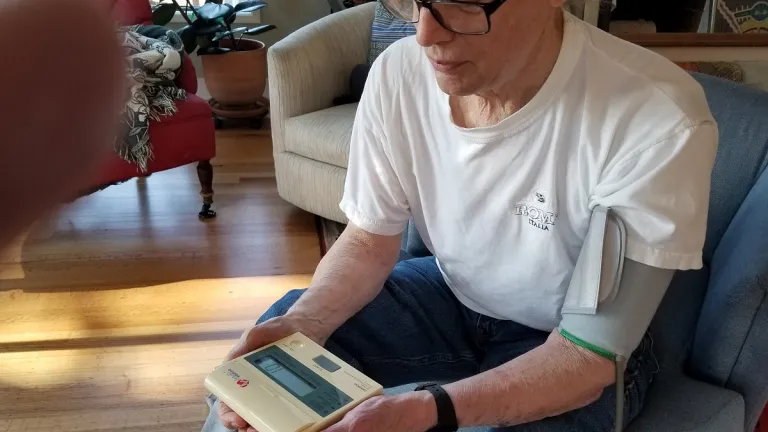
The stroke left Jon with a partial loss of vision in one eye. On Friday afternoon, the doctors phoned me to say they were prescribing physical and occupational therapy. He’d be in the hospital another two weeks.
Just after 7:00 that evening, another doctor called to tell me that Jon had died. A sudden and unexpected pulmonary embolism had taken his life.
At his bedside
This time I was allowed into the hospital. I could be with Jon that evening. I could say good-bye.
Covid did not get prevent small mercy.
Did Covid kill my husband?
I turn these thoughts over in my mind from time to time. But Jon is gone, and ruminating on the what-ifs won’t bring him back. Most days, I can put my nagging thoughts aside. Most days.
Fortunately, I had the presence of mind to embrace my husband on the street in front of our house before the ambulance took him away. That memory comforts me. So is the love letter I sent to Jon in the form of a blog post back in 2019. You can find it at, “Lucky Me. I Told Jon Newhall I Loved Him.”

0 Responses
How heartbreaking! And frustrating! Everyone expects either they will be at their spouse’s bedside or the reverse. You are legion! There ought to be a support group for people who endured not being with their dying loved ones due to Covid protocols.
I do meet online with several women whose husbands died during the pandemic. The isolation that the shut-down imposed was also hard for everyone to bear.
Your feelings and sadness match mine as we endure the second year of our widowhood.
The love does not end nor the feelings of having been so lucky to have found that love, but the loss of my kind gentle husband still hurts daily. Harder being the survivor. Nancy
I think about how Jon would have coped if I had been the first to die. And I have trouble picturing it. Not sure why.
Difficult. One had to wonder. I’ve had several friends die who I thought shouldn’t have during Covid. They did not have Covid but the cutback in services meant something.
I’m thinking of you — it seems you have lost a lot of people. This is hard.
Oh dear Barbara. I love your writings. I too am totally glad you hugged Jon on the street. You are an amazing woman. Everyone handles grief in their own special way. I’m glad Elaine and I were home that evening so we could take you to the hospital to have some time with Jon, even though he was already dead . . . It’s still challenging to get good medical care . . . Enjoy the writers group. EB
Thank you for being there that night. It meant everything to know that I could call on you.
Oh, dear. Of course you just wonder “what if” without any satisfactory answer. But YOU know you loved him with all your heart & soul & body, & HE knew it . . . I don’t understand why the hospital did not permit you to be with him! That seems cold & unsympathetic!
Know that we love you and pray that you are comforted knowing that your dear husband was blessed by your devotion to him. Affectionately
Thank you for the reassuring words. It helps to be reminded that Jon knew I loved him and that I didn’t let him down. The reason the ER would not let me in was, of course, Covid.
Barbara, this is just heartbreaking. It was hard enough to lose the love of your life, and to wonder if it
didn’t have to be must to be so painful. Sending a virtual hug..
Hug received! Thank you! Every little hug helps. Truly.
you add to our understanding of the consequences of death and life in the pandemic.
thinking of you, and jon
Jon and I always counted you among our special friends. So good to hear from you.
Barb, you did all anyone could have done for Jon, yet the “what ifs” are so hard to get past. I’m experiencing the same feelings about my brother’s death. Maybe I should have insisted more strongly that he stay in a nursing home near my house instead of the one he stubornly chose, which was 60 miles away. Similar thoughts roll through my mind every day. The truth is that nothing I could have done would have changed the outcome. Probably the same with you, Barb. We must accept the things we cannot change.
I’ve come to the conclusion that the “what ifs” are an inevitable part of grieving the people we love. A related feeling is the one, “Oh, I could have spent more time with them.” The brain just does that — keeping that in mind helps me to put those thoughts aside . . . I loved Bobby a lot. I’m so glad I had him as a cousin.